


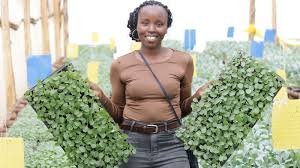
Molo farmer Wangari Ndung'u builds second greenhouse for 600,000 cabbage seedlings
Story
A Molo, Nakuru County, farmer who switched from potatoes to cabbage seedlings has built a second greenhouse designed to hold 600,000 seedlings.
What happened
Farmer Wangari Ndung'u has built a second greenhouse in Molo, Nakuru County, for growing cabbage seedlings. The 15-by-30-metre structure holds 3,000 trays and is designed for 600,000 seedlings [2]. The report was carried by Nation Kenya [2]. The sources do not explain why the story is drawing searches now. Source [1] was supplied only as a headline, so its contents could not be checked.
Why Kenyans are searching for it
The sources do not say why this topic is attracting searches. What they describe is a farm profile: a Chuka University graduate who worked in business development for three years before moving into potato and then cabbage seedling farming [2].
Key facts
- Ndung'u graduated from Chuka University in 2018 and worked for three years as a business development specialist at construction companies in Kenya and abroad [2].
- In 2023 she planted certified potato material on two acres. The following season the area grew to eight acres, and she later switched to cabbage seedlings [2].
- Her first greenhouse, for which she invested 480,000 shillings in 2024, measures 15 by 8 metres. It holds 480 trays with a maximum capacity of 100,000 seedlings [2].
- Seeds are sown in coconut substrate and kept in a darkened room for three days before moving to the greenhouse. Seedlings are sold for two shillings each [2].
- According to Ndung'u, the first batch earned more than 100,000 shillings. The second batch was less successful because of the acidity of the coconut substrate, after which she consulted an agronomist [2].
- She grows the Gloria, Victoria and Greenboy varieties. She sells through local markets, Facebook, WhatsApp, Instagram and to neighbouring farmers [2].
- She said sales from one production cycle in one greenhouse amount to 400,000–600,000 shillings, and reported creating more than 15 jobs [2].
What to watch
- The sources report first-batch earnings of more than 100,000 shillings and per-cycle sales of 400,000–600,000 shillings. They do not say how these figures relate, or whether the larger figure includes the second greenhouse.
- The sources do not give the cost of the second greenhouse.
- Ndung'u named production costs and irregular rainfall as the main challenges. To secure water, three boreholes were drilled on the farm and rainwater is collected [2].
Sources
- [1] My switch from potatoes to cabbage seedlings: University graduate's thriving greenhouse - Daily Nation
- [2] Kenyan farmer builds greenhouse for 600,000 cabbage seedlings - UA.NEWS
Compiled by the NairobiCity trend desk from the sources above.






 English
 Arabic
 French
 Spanish
 Deutsch
 Romaian
 Portuguese (Brazil)
 Greek